
Dialect of air travel: How movement control keeps you safe
As powers keep on hunting down the Malaysia Airlines stream that go out absent on March 8, musings turn to air wellbeing.
It's astoundingly extraordinary for planes to encounter breakdowns, particularly genuine ones. "Planes don't drop out of the sky at 36,000 feet," says CNN's flight reporter Richard Quest.

Nine instances of "pilot error" in Hong Kong last year are being investigated, but they rarely impact safety
Actually when blunders do happen, regularly human in nature, carriers and activity controllers utilize a limitless show of techniques to guarantee our wellbeing.
Hong Kong Airlines was included in nine occurrences in which pilots clearly neglected directions from air activity controllers (Atcs), including a plane maneuvering onto a runway without consent and disappointment to accompany guidelines about elevation and heading.
Hong Kong's Civil Aviation Department is as of now exploring those occurrences.
Other later instances of miscommunication between pilots and ground controllers could be:
• July 2010: The skipper of an Air Blue flight neglects directions from activity control and collides with mountains close Islamabad, slaughtering 152.
• June 2013: Two Boeing 747s barely miss impacting over Scotland when one plane turns right and the other left - adequately finishing the inverse of ATC directions.
• December 2013: A British Airways large fly collides with a building at Johannesburg hangar when the pilot goes down the wrong taxiway.
As per Ady Dolan, an air activity controller at London Heathrow Airport who spoke with CNN for this story, human failures between pilots and air movement controllers happen on "a regular schedule."
At the same time while regular, most failures go unnoticed and are of no danger to wellbeing, because of built frameworks of correspondence and innovation.
* English ... at the same time whose English?

English is the language of the skies.
As per Dolan, controllers at Heathrow bargain with 85 aerial transports and 1,350 flights a day.
Controllers requirement to have the capacity to correspond with pilots of numerous diverse nationalities, he says.
English is the dialect of flight and imperative for pilot-controller correspondence.
"We're lucky that English is the dialect of the air," says Dolan. "Assuming that English is not the pilot's first dialect and they just come to Heathrow sporadically, we have to bear the cost of additional consideration to that pilot.
"We can't talk with pace and contraction as we might to somebody who comes here a few times each day."
A pilot who regularly travels to China and Southeast Asia, and who spoke with CNN on state of namelessness, says pilots and air activity controllers for the most part revel in a great relationship, particularly in Hong Kong where ATC benchmarks are high.
"Anyhow China might be a spot of an issue," he says. "We ought to all be talking English, yet for a considerable measure of individuals its their second dialect."
The pilot says aerial shuttles have differing approaches on selecting pilots with great English, and this can result in issues.
* Patter and chatter
The International Civil Aviation Organization (ICAO), an United Nations organization that sets and manages principles of air wellbeing, says institutionalized manner is a critical some piece of pilot-controller discourse.
For instance, before the 1977 KLM-Pan Am accident, the pilot supposedly told activity control, "We are currently at takeoff" as he moved down the runway.
The controller comprehended this to mean the plane was prepared to take off, yet was still stationary and holding up for further directions.
Therefore the controller didn't caution the pilot about an alternate plane on the runway, which was darkened by thick mist.
"Pilot and air movement controller radiotelephony correspondence is a critical some piece of preparing paving the way to permitting for both capacities," says an ICAO agent. "ICAO direction obliges that both controllers and pilots use institutionalized manner in their correspondence trades.
"ICAO is persistently investigating and redesigning its institutionalized manner rules to better help the air transport framework and ICAO dialect capability necessities have been set up since March 2008."
The relationship between controllers and pilots capacities well by and large, says South African Airways pilot Sarah Jones, who flies crosswise over South Africa and Africa.
"There are heaps of structures set up to attempt and avoid miscommunication between us. Clearly, there must be believe," she says.
While Jones says ATC gauges are high in landing strips, for example, OR Tambo in Johannesburg, they're not as great at some other African airfields.
She says it could be testing when controllers and different pilots don't talk English.
"You must be extremely vigilant, listening to the next movement and having great situational cognizance," she says. "It's an issue when they are talking, say, French or Brazilian, and you can't comprehend what different pilots are telling ATC in airfields where you might be all the more commonly mindful at any rate."
* Human mistake inescapable

Mistakes that happen as a consequence of pilot-controller misconceptions are ordinary, yet go generally unnoticed by travelers, as per the pilots and controllers questioned for this story.
As air movement builds, so does the potential for poor correspondence.
That is the reason its imperative to have robust reinforcement systems set up, says Heathrow air activity controller Ady Dolan.
Dolan works for UK-based NATS, a supplier of air movement benefits in the UK and more than 30 different nations.
The organization likewise gives systems to managing potential issues.
"At any hangar in the event that you have people included there are going to be slips," he says. "Our occupation as an ATC supplier is to recognize the potential for that mistake before it happens and afterward when it does happen to have alleviations set up to adjust that."
He says regular failures could be "basic," like a plane winding up confronting south rather than north on a stand.
"Security has not been traded off, however you as an ATC requirement to have at the top of the priority list the flying machine may wind up confronting south rather than north. It's the sort of human slip that happens once a day; it has no effect (however) is not recognized."
The pilot who travels to China and Southeast Asia says the way of flying and individuals signifies "handfuls" of little slip-ups are made normally.
"There are missteps, however we are there to oversee it and that is the place guidelines of preparing and checking and a thorough working method come in," he says. "It implies you can get on the deck with a pilot you have never flown with previously.
"It's just a minor danger, however there is dependably the potential for things to happen and to raise into a position where things could be hurtful.
"That is the reason its certain that cases like the ones in Hong Kong now light and are continuously examined.
"The extent that ATC goes, assuming that they let you know to plunge to a certain level, one pilot sets the level and alternate gets the perusing and rehashes it and afterward alternate rehashes it once more. It's an arrangement of twofold checking.
"That doesn't mean we never have 'height busts' [aircraft sliding to heights for which they aren't given clearance] however there is great reinforcement with Traffic Collision Avoidance System and Ground Proximity Warning System."
Sarah Jones coincides on the potential for failures.
"Assuming that ATC provides for you an ascension guideline and a heading direction you could get those befuddled," she demonstrates. "That is the reason you generally have one pilot flying and one checking.
"Mix-ups can happen normally yet they get adjusted rapidly. In the event that there is any conceivable disarray you generally twofold check with ATC rapidly, that is the framework."
* Electronic correspondence displacing human contact
The every day procedure of taking care of climate, deferrals, separating airplane equally for arriving and takeoffs and crushing greatest limit for runways is getting more confused.
Sarah Jones says that the adjusting of careful control between security and keeping movement moving is looked after by shared admiration.
ICAO additionally accepts the potential for things to happen could be took care of.
"The part of viable correspondence has long been viewed as a key segment of security," says the representative. "ICAO has devoted and keeps on dedicaing much exertion and assets to guaranteeing our direction around there is far reaching and adjusted to operational requirements."
The expanding utilization of innovation over human voices to speak with the flight deck offers one result.
Case in point, Heathrow passes on electronic clearances for takeoff specifically to the flight deck. Indeed in this way, its improbable we'll see workstations totally assuming control activity control in this era.
"You've became equipped to believe the data that is, no doubt went to you or the entire framework goes to pieces," says Dolan. "In the event that the pilot is in any mistrust as to the wellbeing of the directions and is needing to second figure things you know you are in an awful circumstance."
As powers keep on hunting down the Malaysia Airlines stream that go out absent on March 8, musings turn to air wellbeing.
It's astoundingly extraordinary for planes to encounter breakdowns, particularly genuine ones. "Planes don't drop out of the sky at 36,000 feet," says CNN's flight reporter Richard Quest.
Nine instances of "pilot error" in Hong Kong last year are being investigated, but they rarely impact safety
Actually when blunders do happen, regularly human in nature, carriers and activity controllers utilize a limitless show of techniques to guarantee our wellbeing.
Hong Kong Airlines was included in nine occurrences in which pilots clearly neglected directions from air activity controllers (Atcs), including a plane maneuvering onto a runway without consent and disappointment to accompany guidelines about elevation and heading.
Hong Kong's Civil Aviation Department is as of now exploring those occurrences.
Other later instances of miscommunication between pilots and ground controllers could be:
• July 2010: The skipper of an Air Blue flight neglects directions from activity control and collides with mountains close Islamabad, slaughtering 152.
• June 2013: Two Boeing 747s barely miss impacting over Scotland when one plane turns right and the other left - adequately finishing the inverse of ATC directions.
• December 2013: A British Airways large fly collides with a building at Johannesburg hangar when the pilot goes down the wrong taxiway.
As per Ady Dolan, an air activity controller at London Heathrow Airport who spoke with CNN for this story, human failures between pilots and air movement controllers happen on "a regular schedule."
At the same time while regular, most failures go unnoticed and are of no danger to wellbeing, because of built frameworks of correspondence and innovation.
* English ... at the same time whose English?
English is the language of the skies.
As per Dolan, controllers at Heathrow bargain with 85 aerial transports and 1,350 flights a day.
Controllers requirement to have the capacity to correspond with pilots of numerous diverse nationalities, he says.
English is the dialect of flight and imperative for pilot-controller correspondence.
"We're lucky that English is the dialect of the air," says Dolan. "Assuming that English is not the pilot's first dialect and they just come to Heathrow sporadically, we have to bear the cost of additional consideration to that pilot.
"We can't talk with pace and contraction as we might to somebody who comes here a few times each day."
A pilot who regularly travels to China and Southeast Asia, and who spoke with CNN on state of namelessness, says pilots and air activity controllers for the most part revel in a great relationship, particularly in Hong Kong where ATC benchmarks are high.
"Anyhow China might be a spot of an issue," he says. "We ought to all be talking English, yet for a considerable measure of individuals its their second dialect."
The pilot says aerial shuttles have differing approaches on selecting pilots with great English, and this can result in issues.
* Patter and chatter
The International Civil Aviation Organization (ICAO), an United Nations organization that sets and manages principles of air wellbeing, says institutionalized manner is a critical some piece of pilot-controller discourse.
For instance, before the 1977 KLM-Pan Am accident, the pilot supposedly told activity control, "We are currently at takeoff" as he moved down the runway.
The controller comprehended this to mean the plane was prepared to take off, yet was still stationary and holding up for further directions.
Therefore the controller didn't caution the pilot about an alternate plane on the runway, which was darkened by thick mist.
"Pilot and air movement controller radiotelephony correspondence is a critical some piece of preparing paving the way to permitting for both capacities," says an ICAO agent. "ICAO direction obliges that both controllers and pilots use institutionalized manner in their correspondence trades.
"ICAO is persistently investigating and redesigning its institutionalized manner rules to better help the air transport framework and ICAO dialect capability necessities have been set up since March 2008."
The relationship between controllers and pilots capacities well by and large, says South African Airways pilot Sarah Jones, who flies crosswise over South Africa and Africa.
"There are heaps of structures set up to attempt and avoid miscommunication between us. Clearly, there must be believe," she says.
While Jones says ATC gauges are high in landing strips, for example, OR Tambo in Johannesburg, they're not as great at some other African airfields.
She says it could be testing when controllers and different pilots don't talk English.
"You must be extremely vigilant, listening to the next movement and having great situational cognizance," she says. "It's an issue when they are talking, say, French or Brazilian, and you can't comprehend what different pilots are telling ATC in airfields where you might be all the more commonly mindful at any rate."
* Human mistake inescapable
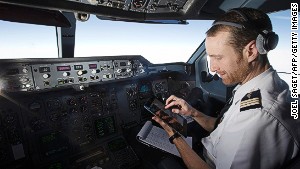
Mistakes that happen as a consequence of pilot-controller misconceptions are ordinary, yet go generally unnoticed by travelers, as per the pilots and controllers questioned for this story.
As air movement builds, so does the potential for poor correspondence.
That is the reason its imperative to have robust reinforcement systems set up, says Heathrow air activity controller Ady Dolan.
Dolan works for UK-based NATS, a supplier of air movement benefits in the UK and more than 30 different nations.
The organization likewise gives systems to managing potential issues.
"At any hangar in the event that you have people included there are going to be slips," he says. "Our occupation as an ATC supplier is to recognize the potential for that mistake before it happens and afterward when it does happen to have alleviations set up to adjust that."
He says regular failures could be "basic," like a plane winding up confronting south rather than north on a stand.
"Security has not been traded off, however you as an ATC requirement to have at the top of the priority list the flying machine may wind up confronting south rather than north. It's the sort of human slip that happens once a day; it has no effect (however) is not recognized."
The pilot who travels to China and Southeast Asia says the way of flying and individuals signifies "handfuls" of little slip-ups are made normally.
"There are missteps, however we are there to oversee it and that is the place guidelines of preparing and checking and a thorough working method come in," he says. "It implies you can get on the deck with a pilot you have never flown with previously.
"It's just a minor danger, however there is dependably the potential for things to happen and to raise into a position where things could be hurtful.
"That is the reason its certain that cases like the ones in Hong Kong now light and are continuously examined.
"The extent that ATC goes, assuming that they let you know to plunge to a certain level, one pilot sets the level and alternate gets the perusing and rehashes it and afterward alternate rehashes it once more. It's an arrangement of twofold checking.
"That doesn't mean we never have 'height busts' [aircraft sliding to heights for which they aren't given clearance] however there is great reinforcement with Traffic Collision Avoidance System and Ground Proximity Warning System."
Sarah Jones coincides on the potential for failures.
"Assuming that ATC provides for you an ascension guideline and a heading direction you could get those befuddled," she demonstrates. "That is the reason you generally have one pilot flying and one checking.
"Mix-ups can happen normally yet they get adjusted rapidly. In the event that there is any conceivable disarray you generally twofold check with ATC rapidly, that is the framework."
* Electronic correspondence displacing human contact
The every day procedure of taking care of climate, deferrals, separating airplane equally for arriving and takeoffs and crushing greatest limit for runways is getting more confused.
Sarah Jones says that the adjusting of careful control between security and keeping movement moving is looked after by shared admiration.
ICAO additionally accepts the potential for things to happen could be took care of.
"The part of viable correspondence has long been viewed as a key segment of security," says the representative. "ICAO has devoted and keeps on dedicaing much exertion and assets to guaranteeing our direction around there is far reaching and adjusted to operational requirements."
The expanding utilization of innovation over human voices to speak with the flight deck offers one result.
Case in point, Heathrow passes on electronic clearances for takeoff specifically to the flight deck. Indeed in this way, its improbable we'll see workstations totally assuming control activity control in this era.
"You've became equipped to believe the data that is, no doubt went to you or the entire framework goes to pieces," says Dolan. "In the event that the pilot is in any mistrust as to the wellbeing of the directions and is needing to second figure things you know you are in an awful circumstance."

No comments:
Post a Comment